Scientists have formally identified a previously undocumented monkey species living in the dense rainforests of the Democratic Republic of Congo, adding another remarkable animal to the country’s globally important natural heritage.
The species has been given the scientific name Colobus congoensis. Researchers recommend Likweli as its common name, following the name used by Balanga communities living near its range.
The discovery was described in a peer-reviewed study published in PLOS ONE on 15 July 2026. It is only the fifth new African monkey species discovered from a population previously unknown to science during the past 75 years.
The animal was not “created” or newly arrived in the forest. It had lived there for generations and was known to a small number of local residents. What is new is its formal scientific identification as a species distinct from every other known monkey.
Meet Likweli, the orange-lipped monkey
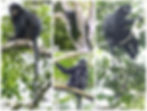
Likweli has glossy black fur, a long tail and distinctive orange-cream markings around its mouth and nose. Long black hairs frame its face, while large folded ears and a white patch beneath its tail help distinguish it from related colobus monkeys.
It is smaller than many of its relatives, weighing approximately 6.8 kilograms, or about 15 pounds. Researchers most often observed the monkeys in small groups averaging around six animals.
The species lives high in closed-canopy forest in and around Lomami National Park, between the Lomami and Congo, or Lualaba, rivers in east-central DRC. Its known range covers only about 1,700 square kilometres.
This remote habitat and the animal’s quiet behaviour helped it remain outside the formal scientific record for so long.
The discovery began with a photograph in 2008
SCIENCE AND ENVIRONMENT
New Monkey Species Discovered in the DRC’s Congo Rainforest

Jul 16, 2026
Aug 5, 2026
10 min read

Published
Updated:
Scientists have formally identified a previously undocumented monkey species living in the dense rainforests of the Democratic Republic of Congo, adding another remarkable animal to the country’s globally important natural heritage.
The species has been given the scientific name Colobus congoensis. Researchers recommend Likweli as its common name, following the name used by Balanga communities living near its range.
The discovery was described in a peer-reviewed study published in PLOS ONE on 15 July 2026. It is only the fifth new African monkey species discovered from a population previously unknown to science during the past 75 years.
The animal was not “created” or newly arrived in the forest. It had lived there for generations and was known to a small number of local residents. What is new is its formal scientific identification as a species distinct from every other known monkey.
Meet Likweli, the orange-lipped monkey
Likweli has glossy black fur, a long tail and distinctive orange-cream markings around its mouth and nose. Long black hairs frame its face, while large folded ears and a white patch beneath its tail help distinguish it from related colobus monkeys.

It is smaller than many of its relatives, weighing approximately 6.8 kilograms, or about 15 pounds. Researchers most often observed the monkeys in small groups averaging around six animals.
The species lives high in closed-canopy forest in and around Lomami National Park, between the Lomami and Congo, or Lualaba, rivers in east-central DRC. Its known range covers only about 1,700 square kilometres.
This remote habitat and the animal’s quiet behaviour helped it remain outside the formal scientific record for so long.
The discovery began with a photograph in 2008
The first recorded evidence emerged in 2008 when conservationists Ashley Vosper and Bernard Ikembelo photographed an unidentified monkey during an expedition by the Lukuru Wildlife Research Foundation. The animal was high in the forest canopy in an area that later became part of Lomami National Park.
The photograph showed only part of the monkey, but the field team suspected that it did not match any species already documented in the area.
ADVERTISEMENT
There were no further confirmed reports for approximately ten years.
In November 2018, Jean-Pierre Kapale led a surveillance patrol in the park’s Courbure Sector and photographed a black monkey with pale facial markings and a white patch beneath its tail. Kapale and local field assistants subsequently documented the animal at seven additional locations over the following ten months.
Researchers then reviewed photographs collected during earlier patrols and discovered another image taken in August 2018 that had initially been misidentified.
Between 2018 and 2022, field teams eventually recorded 114 observations across the species’ limited range.
How scientists proved it was a separate species
A different appearance alone is not always enough to establish a new species. The research team therefore examined several independent forms of evidence.
Physical evidence
Researchers studied the monkey’s body size, fur, facial markings, skull and teeth. Its orange-cream mouth patch, smaller body and other anatomical characteristics separated it from known members of the Colobus genus.
Genetic evidence
DNA analysis confirmed that Likweli belongs to the Colobus group but represents a distinct evolutionary lineage.
Its closest known relative is the black colobus, Colobus satanas, whose present range is more than 1,200 kilometres away in west-central Africa. The genetic evidence indicates that their ancestral lineages separated approximately five million years ago.
Vocal evidence
The team also studied recordings of the monkey’s deep calls. Although some features resemble the calls of the black colobus, the sequence and frequency of Likweli’s vocalisations have their own acoustic pattern.
The combination of anatomical, genetic and sound evidence gave the researchers confidence that they were dealing with a separate species.
Local knowledge was essential
The discovery also demonstrates why local knowledge remains important to modern science.
ADVERTISEMENT
Researchers interviewed people in 52 settlements around the animal’s known habitat. Residents in only eight locations could accurately describe it, showing how rare and difficult to observe the monkey is even within its home range.
Balanga communities west of the Lomami River used the name Likweli. Mituku communities near the eastern limit of its range called it kasaba nkoni, meaning “the branch shaker.”
The peer-reviewed paper uses “Balanga,” correcting some early media reports that wrote “Bangala.”
Congolese naturalists, community monitors, park personnel and eco-guards carried out much of the difficult fieldwork. The research was authorised by the Congolese Institute for Nature Conservation, known as ICCN.
Lead author John Hart said the discovery could not have happened without Congolese explorer-naturalists who recognised an unfamiliar animal and completed extensive surveys across trackless forest.
A name connected directly to the DRC
The scientific name Colobus congoensis recognises the fact that the species’ known range is limited to the Democratic Republic of Congo.
Congolese biologist Junior Amboko, a co-corresponding author of the study, said the name honours the Congo Basin’s natural heritage and underlines the country’s importance to global biodiversity research.
Researchers believe it may be the first primate formally named specifically for the Democratic Republic of Congo. They recommend retaining Likweli as the common name in recognition of the communities familiar with the animal.
The same DRC forests revealed the Lesula monkey
Likweli is not the first major primate discovery from the wider Lomami landscape.
In 2007, researchers encountered another monkey known locally as the Lesula in the middle Lomami Basin. Scientists formally described it as Cercopithecus lomamiensis in a PLOS ONE study published in 2012.
The Lesula is restricted to the lowland forests between the middle Lomami and upper Tshuapa rivers. Physical and molecular analysis showed that it was distinct from its closest known relative, Hamlyn’s monkey.
Trending Now


ADVERTISEMENT
Several scientists involved in the Lesula research also helped identify Likweli. The two discoveries, separated by 14 years of scientific publication, strengthen the case that the central Congo Basin remains one of the world’s most important—and still incompletely documented—regions for mammal research.
They also show that the rivers of the Congo Basin can act as natural barriers. Over long periods, isolated animal populations can follow separate evolutionary paths and eventually become distinct species.
Scientists recommend endangered status
The excitement surrounding the discovery comes with an urgent conservation warning.
Likweli occupies a small area, appears to have a limited population and depends on particular patches of high, closed-canopy forest. Researchers identified habitat conversion and increased hunting pressure as major risks.
The scientific paper proposes a preliminary classification of Endangered under International Union for Conservation of Nature criteria. This is a research recommendation; it should not be reported as a completed formal IUCN Red List assessment unless the IUCN publishes one.
Researchers say protecting Lomami National Park, limiting habitat destruction and working with nearby communities to prevent hunting will be essential to the species’ survival.
Why the discovery matters for the DRC
The identification of Colobus congoensis is a scientific achievement with national and international importance.
It highlights the extraordinary biodiversity protected inside the DRC’s rainforests. It also recognises the contribution of Congolese researchers, eco-guards, field assistants and communities whose knowledge made the discovery possible.
The finding may encourage further scientific research, responsible conservation investment and greater global interest in Lomami National Park. However, attention must be matched by support for the people protecting the forest and by measures addressing hunting and habitat loss.
Likweli’s formal identification shows that the Congo rainforest still holds biological secrets. It also delivers a clear message: species can disappear before science has even had the opportunity to understand them.
Reporting and research credits
Primary scientific study: John A. Hart, Junior D. Amboko, Julia L. Arenson, Emma R. Horton, Kathryn F. Coates, Jean-Pierre I. Kapale, Mardoché B. Koko, Terese B. Hart, Christopher C. Gilbert, Eric J. Sargis and Kate M. Detwiler. “Likweli: A remarkable new species of Colobus monkey from the Lomami National Park, Democratic Republic of Congo.” PLOS ONE, 15 July 2026. DOI: 10.1371/journal.pone.0349857.
Original supplied news source: Jess Cockerill. “Entirely New Monkey Species Discovered in The Congo Rainforest, And It Doesn't Look Impressed.” ScienceAlert, 16 July 2026.
Research institution: Florida Atlantic University. “New Species of African Monkey Discovered in the Congo Rainforest,” 15 July 2026.
Supporting institutional account: Yale University. “Meet ‘Likweli’: A new monkey species discovered in the Congo Basin,” 15 July 2026.
Supporting DRC discovery: John A. Hart and colleagues. “Lesula: A New Species of Cercopithecus Monkey Endemic to the Democratic Republic of Congo.” PLOS ONE, 12 September 2012. DOI: 10.1371/journal.pone.0044271.
Congolese conservation authority: Fieldwork was conducted with authorisation from the Congolese Institute for Nature Conservation. The published study credits Balanga and Mituku communities, Congolese explorer-naturalists, ICCN personnel, park staff and local field teams.
