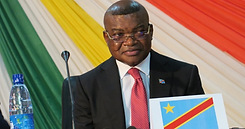
Kalev Mutond, the former head of the Democratic Republic of Congo’s National Intelligence Agency and a close associate of Joseph Kabila, was reported to have died in Paris on 5 October 2026. His career placed him at the centre of disputes over state security, political repression and accountability during and after Kabila’s presidency.
Who is Kalev Mutond? Kalev Mutond is a Congolese former intelligence chief who led the ANR from 2011 to 2019 under Joseph Kabila. His record includes U.S. sanctions, a later European delisting and contested legal proceedings. Congolese media reported his death in Paris on 5 October 2026, aged 69.
The Paris reports and a career in Congolese intelligence
Radio Okapi reported his death, citing relatives, and said he had been in Paris for medical care. The report did not identify a cause of death. That distinction matters: a period of treatment does not establish which illness, medical event or complication caused someone’s death.
Separately, 7SUR7.CD’s report cited former intelligence personnel who had worked under him. It gave his birth date as 3 March 1957, consistent with an age of 69 on the reported date of death. Its account of medical circumstances came from unnamed sources rather than a publicly identified medical or family statement.
CongoRassure attributed the announcement to Barbara Nzimbi, a communications adviser to former president Kabila. These reports have brought renewed attention to an official whose name often appeared in accounts of political power without the public visibility associated with an elected leader.
Mutond’s defining position was administrator general of the ANR. He led it for roughly eight years, during a period when the agency’s treatment of political opponents became a major issue in Congo’s domestic politics and relations with foreign governments. Understanding that position is essential to understanding the controversies that followed him.
Joseph Kabila’s intelligence chief
The French name Agence nationale de renseignements is commonly abbreviated to ANR. Mutond’s title, administrator general, referred to leadership of that intelligence agency. It did not mean he was president, prime minister or the head of the military judiciary.
A 2017 Le Monde profile described him as an influential figure in Kabila’s government and included an interview with him. The account portrayed a security official who defended his work as protecting state institutions while facing accusations that the agency served political interests. His closeness to Kabila formed a central part of that public profile.
BIOGRAPHY
Kalev Mutond Biography: ANR Career, Sanctions and Legal Record

Oct 5, 2026
Oct 5, 2026
12 min read

Published
Updated:
Kalev Mutond, the former head of the Democratic Republic of Congo’s National Intelligence Agency and a close associate of Joseph Kabila, was reported to have died in Paris on 5 October 2026. His career placed him at the centre of disputes over state security, political repression and accountability during and after Kabila’s presidency.
Who is Kalev Mutond? Kalev Mutond is a Congolese former intelligence chief who led the ANR from 2011 to 2019 under Joseph Kabila. His record includes U.S. sanctions, a later European delisting and contested legal proceedings. Congolese media reported his death in Paris on 5 October 2026, aged 69.
The Paris reports and a career in Congolese intelligence
Radio Okapi reported his death, citing relatives, and said he had been in Paris for medical care. The report did not identify a cause of death. That distinction matters: a period of treatment does not establish which illness, medical event or complication caused someone’s death.
Separately, 7SUR7.CD’s report cited former intelligence personnel who had worked under him. It gave his birth date as 3 March 1957, consistent with an age of 69 on the reported date of death. Its account of medical circumstances came from unnamed sources rather than a publicly identified medical or family statement.
CongoRassure attributed the announcement to Barbara Nzimbi, a communications adviser to former president Kabila. These reports have brought renewed attention to an official whose name often appeared in accounts of political power without the public visibility associated with an elected leader.
Mutond’s defining position was administrator general of the ANR. He led it for roughly eight years, during a period when the agency’s treatment of political opponents became a major issue in Congo’s domestic politics and relations with foreign governments. Understanding that position is essential to understanding the controversies that followed him.
Joseph Kabila’s intelligence chief
The French name Agence nationale de renseignements is commonly abbreviated to ANR. Mutond’s title, administrator general, referred to leadership of that intelligence agency. It did not mean he was president, prime minister or the head of the military judiciary.
A 2017 Le Monde profile described him as an influential figure in Kabila’s government and included an interview with him. The account portrayed a security official who defended his work as protecting state institutions while facing accusations that the agency served political interests. His closeness to Kabila formed a central part of that public profile.
This created a recurring argument around his career: where did protecting the state end, and protecting those who governed it begin? His critics raised that question through allegations about detention and repression. Mutond defended the agency’s work and disputed the picture presented by its opponents.
His departure from the ANR in 2019 changed his institutional position. It did not remove his earlier record from public scrutiny. The sanctions and legal disputes discussed below arose in different places, under different rules and at different stages of his career. They should be read as separate developments rather than one continuous criminal judgment.
The U.S. sanctions imposed in 2016
On 12 December 2016, the U.S. Treasury announced sanctions against Mutond, identified in the notice as Kalev Mutondo, and Congolese official Evariste Boshab. The issuing authority said the designations concerned actions or policies undermining democratic processes or institutions in the DRC.
Treasury attributed opposition surveillance, support for suppressing demonstrations and extrajudicial detention to Mutond. Those statements describe the U.S. government’s stated grounds for imposing sanctions. They are not findings from a criminal trial.
ADVERTISEMENT
The notice said assets within U.S. jurisdiction were frozen and U.S. persons were generally prohibited from transactions with the designated officials. Those consequences explain why the announcement had significance beyond diplomatic criticism: it applied financial restrictions through the American sanctions system.
The timing is also important. The designation occurred while Mutond still led the ANR, before his departure in 2019. An account that places the original U.S. sanctions after that departure reverses the documented sequence.
European delisting in June 2023
Mutond’s European sanctions history took a different turn. On 19 June 2023, the Council of the European Union announced his delisting, alongside Emmanuel Ramazani Shadary. The Council said it acted in light of relevant General Court rulings from March 2023.
The change appears in Council Implementing Decision 2023/1189, which removed their entries from the relevant annex. That official instrument supplies a precise legal basis for saying he was removed from the European list in June 2023.
Delisting had a specific scope. It concerned EU restrictive measures and did not itself cancel a designation made by the United States. Nor was it a Congolese criminal acquittal. Different authorities can reach different decisions because they are addressing different legal questions.
The Council also stated that its broader DRC sanctions regime remained in place.
Removing two individuals therefore did not end the regime or settle every controversy concerning their public careers. For Mutond’s biography, the central fact is the change in his European listing, together with the judicial context the Council expressly identified.
The Congolese complaints and search notice
In March 2021, Mutond faced a search notice issued by the prosecutor’s office near the Kinshasa-Gombe Court of Appeal. Radio Okapi’s contemporary account quoted the prosecutor’s correspondence and described allegations involving arbitrary arrest, unlawful detention with torture and extortion.
The notice was a procedural step in a contested legal matter. It was not a conviction. Describing someone as sought by prosecutors establishes the authorities’ attempt to locate or bring that person into proceedings; it does not establish that each alleged act occurred or that the person was criminally responsible.
His lawyer Clément Tshitembo disputed the proceedings. In an April 2021 Radio Okapi interview, he said his client’s whereabouts were unknown and argued that Mutond was being subjected to harassment. Those were the lawyer’s statements, rather than an independent determination about the complaints.
The disputes also produced litigation involving Mutond and his accusers. Radio Okapi reported in July 2021 that he had brought proceedings over allegedly damaging accusations and that jurisdictional questions were being argued between courts.
ADVERTISEMENT
In August 2023, reporting described suspension of the search notice. That development should be distinguished from a judgment on the substance of every complaint. A search notice, a decision about which court can hear a case and a determination of guilt each serve a different function.
The Darryl Lewis case in the United States
Mutond also appeared in U.S. civil litigation brought by Darryl Lewis, an American citizen who alleged detention and torture in Congo. The allegations involved Mutond and former justice minister Alexis Tambwe Mwamba.
On 17 March 2023, the U.S. Court of Appeals for the District of Columbia Circuit issued a decision in Lewis v. Mutond. It affirmed dismissal for lack of personal jurisdiction and the denial of Lewis’s request for jurisdictional discovery. The court’s introduction explicitly presented the detention and torture claims as allegations.
Personal jurisdiction concerns a court’s authority over a defendant. The appeal therefore addressed whether the U.S. court could exercise that authority in the case before it. It did not produce a criminal conviction of Mutond or a trial verdict deciding whether the alleged treatment occurred.
This is another reason to avoid compressing his legal history into a single label. Financial sanctions, European listing litigation, Congolese complaints and an American civil jurisdiction ruling followed distinct procedures. Each belongs in his record, but their outcomes cannot be substituted for one another.
How Mutond defended the ANR
Mutond’s own response is available in a February 2021 Radio Okapi interview. Discussing criticism of the agency, he said, in English translation:
“The ANR is a victim of political propaganda.”
He defended protections for intelligence agents and rejected the suggestion that such protections made them untouchable. He also denied the portrayal of the agency as an organisation devoted to torture and killing. His statements show how he answered the accusations; they do not independently resolve them.
The interview also covered his political activity after leaving the agency. He described choosing the PPRD within Kabila’s FCC political grouping. This was his own account of his affiliation after his intelligence career, rather than evidence that all his earlier official actions were party activities.
Family information and its limits
Mutond’s family entered the public record through the 2021 proceedings. ACTUALITE.CD reported that his wife sought to intervene in a court case to defend her rights. That report establishes a publicly described spouse at that time, without establishing his marital status in October 2026.
A family communiqué reported by 7SUR7.CD was signed by a daughter and described concern about their father’s whereabouts. Mutond also publicly referred to a daughter in the March 2021 Radio Okapi account. These statements support the existence of children without establishing a complete number.
TRENDING NOW


POPULAR TODAY


ADVERTISEMENT
Kalev Mutond timeline
Year | Event | Significance |
1957 | Birth date reported as 3 March | Consistent with the reported age of 69 in October 2026 |
2011–2019 | Led the ANR under Joseph Kabila | Defined his public role in Congolese intelligence |
2016 | U.S. Treasury designated him for sanctions | Brought financial restrictions and international scrutiny |
2021 | Congolese search notice and contested proceedings | Shifted scrutiny of his former leadership into domestic legal disputes |
2023 | U.S. appeals court affirmed jurisdictional dismissal in Lewis’s civil case | Resolved that jurisdictional appeal, rather than the underlying allegations |
2023 | EU removed him from its sanctions list in June | Changed his status under the European restrictive measures |
2023 | Suspension of the Congolese search notice reported in August | Marked a further procedural change in the domestic matter |
2026 | Death reported in Paris on 5 October | Renewed attention to his career and disputed record |
A record shaped by power and accountability
Mutond’s public significance rests on the office he held and the disputes surrounding how its power was used. His tenure connects the history of Kabila’s government with continuing questions about intelligence oversight and the treatment of political opponents.
The allegations require attribution, and his responses belong alongside them. The legal outcomes require equal precision. European delisting is part of the record, just as the original sanctions are; a jurisdictional dismissal matters without becoming a verdict on the facts. Those distinctions allow a clearer account of an influential official whose defenders and critics offered sharply different descriptions of his service.
Kalev Mutond FAQs
Who is Kalev Mutond?
He is a former Congolese intelligence official who led the ANR from 2011 to 2019 under Joseph Kabila. His name also appears as Kalev Mutondo in official documents and news reports.
What does ANR mean?
ANR stands for Agence nationale de renseignements, the Democratic Republic of Congo’s National Intelligence Agency. Mutond’s position was administrator general.
How old was Kalev Mutond in October 2026?
A reported birth date of 3 March 1957 places him at 69 on 5 October 2026. Contemporary reports of his death gave the same age.
Has Kalev Mutond’s death been reported?
Yes. Radio Okapi and other Congolese outlets reported that he died in Paris on 5 October 2026, citing relatives and former colleagues. His cause of death was not disclosed by relatives in Radio Okapi’s report.
Why did the United States sanction him?
The U.S. Treasury’s December 2016 notice said his actions or policies undermined democratic processes or institutions in Congo. The designation was a sanctions measure, rather than a criminal conviction.
Were his European sanctions removed?
The EU Council announced his removal from the relevant sanctions list on 19 June 2023, following General Court rulings. That decision concerned the European measures.
What happened in the Darryl Lewis case?
In March 2023, the D.C. Circuit affirmed dismissal for lack of personal jurisdiction and denial of jurisdictional discovery. It did not decide the underlying torture allegations at a criminal trial.
ADVERTISEMENT
RELATED ARTICLE