The Democratic Republic of Congo has taken a major step toward building its first modern stock exchange after signing a partnership agreement with the International Finance Corporation (IFC), the private-sector arm of the World Bank Group.
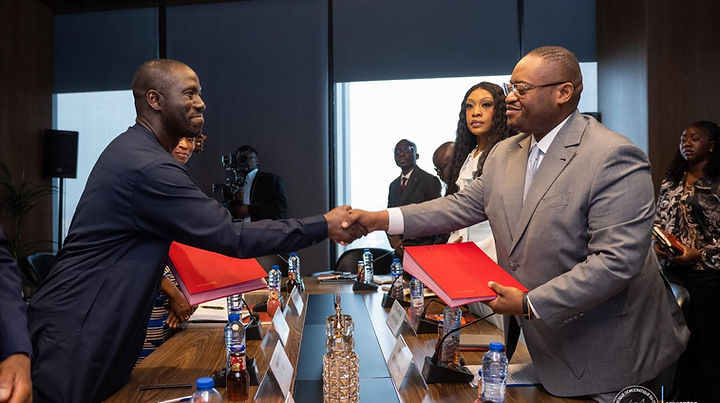
The agreement, signed on June 18, 2026, will support the development of the Kinshasa Stock Exchange (KSE), a project aimed at strengthening the country's financial markets and attracting new investment.
The partnership comes just months after the DRC successfully raised $1.25 billion through its debut Eurobond issuance, a landmark transaction that was heavily oversubscribed and signaled growing international confidence in the Congolese economy.
Authorities view the stock exchange as the next phase in the country's financial modernization efforts.
Under the agreement, the IFC will provide technical assistance to help establish the legal, regulatory, and operational foundations of the exchange.
This includes developing market regulations, creating trading and settlement infrastructure, training regulators and financial professionals, and expanding investor participation within the country.
For decades, the DRC has lacked a domestic capital market, forcing companies to rely primarily on bank financing, foreign investment, or government support.
A functioning stock exchange would give Congolese businesses a new way to raise long-term capital, support the growth of local industries, and attract portfolio investors seeking exposure to one of Africa's most resource-rich economies.
The project could be particularly important for sectors such as mining, energy, infrastructure, agriculture, and manufacturing, providing companies with additional financing options while helping diversify the economy beyond raw mineral exports.
It also offers an opportunity to mobilize domestic savings and channel them into productive investment.
ECONOMIC POLICIES
DRC Partners with IFC to Launch Kinshasa Stock Exchange

Jun 24, 2026
Jun 24, 2026
3 min read
Published
Updated:
The Democratic Republic of Congo has taken a major step toward building its first modern stock exchange after signing a partnership agreement with the International Finance Corporation (IFC), the private-sector arm of the World Bank Group.
The agreement, signed on June 18, 2026, will support the development of the Kinshasa Stock Exchange (KSE), a project aimed at strengthening the country's financial markets and attracting new investment.
The partnership comes just months after the DRC successfully raised $1.25 billion through its debut Eurobond issuance, a landmark transaction that was heavily oversubscribed and signaled growing international confidence in the Congolese economy.
Authorities view the stock exchange as the next phase in the country's financial modernization efforts.
ADVERTISEMENT
Under the agreement, the IFC will provide technical assistance to help establish the legal, regulatory, and operational foundations of the exchange.
This includes developing market regulations, creating trading and settlement infrastructure, training regulators and financial professionals, and expanding investor participation within the country.
For decades, the DRC has lacked a domestic capital market, forcing companies to rely primarily on bank financing, foreign investment, or government support.
ADVERTISEMENT
A functioning stock exchange would give Congolese businesses a new way to raise long-term capital, support the growth of local industries, and attract portfolio investors seeking exposure to one of Africa's most resource-rich economies.
The project could be particularly important for sectors such as mining, energy, infrastructure, agriculture, and manufacturing, providing companies with additional financing options while helping diversify the economy beyond raw mineral exports.
It also offers an opportunity to mobilize domestic savings and channel them into productive investment.


POPULAR TODAY


ADVERTISEMENT
While challenges remain, including regulatory reforms, market liquidity, investor confidence, and capacity building, the IFC partnership moves the project from vision to implementation.
The involvement of the World Bank Group brings international expertise and credibility to an initiative that could reshape the country's financial landscape.
If successful, the Kinshasa Stock Exchange would represent a significant milestone in the DRC's economic transformation, helping position the country not only as a global mining powerhouse but also as an emerging financial center in Central Africa.
ADVERTISEMENT
RELATED ARTICLE