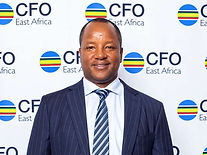
Dr David Morton Silverstein, the American-born cardiologist who made Kenya his home and served as former president Daniel arap Moi’s longtime personal physician, has died at 82. His death was announced on 13 September 2026, prompting tributes that looked beyond State House to a medical career spanning teaching, public hospitals, private practice and the growth of specialist heart care in Kenya.
Who was Dr David Silverstein? Dr David Morton Silverstein was a Chicago-born cardiologist who moved to Kenya in the 1970s, helped develop cardiac services at Kenyatta National Hospital, taught at the University of Nairobi and served Daniel arap Moi as his personal physician for decades. He died in 2026 aged 82.
Death at 82 and the tributes that followed
The first public confirmation came through Gideon Moi, who announced that Silverstein had died and conveyed the Moi family’s condolences. The Star’s initial death report described a physician whose relationship with the former president was defined by attention, empathy and friendship. President William Ruto later mourned him as a distinguished doctor.
The Star’s report on Ruto’s tribute records that Silverstein first treated Moi in 1977, when Moi was vice-president, and continued caring for him for more than four decades. The account also makes an important distinction: Silverstein became known nationally because of one famous patient, but his professional life was not confined to presidential medicine.
The Kenya Medical Association joined the tributes. In a statement reported by Radio Generation Kenya, KMA president Dr Ibrahim Matende described Silverstein’s contribution to Kenyan medicine, including clinical practice, teaching and the development of cardiac services. The Standard’s obituary independently confirmed his death at 82.
No cause of death had been publicly disclosed by an authorised family or medical source as of 14 September 2026. Reports also did not consistently establish the exact time of death. The most precise and defensible account is that his death was announced on 13 September and that he was 82.
For XTRAfrica readers, the moment also belongs within a broader Kenyan health story. The country’s medical history is shaped not only by eminent specialists but by institutions, training and working conditions—issues visible in XTRAfrica’s earlier coverage of the agreement that ended Kenya’s 56-day doctors’ strike.
Early life in Chicago and medical training
Silverstein was born in the United States and grew up in northern Chicago in an observant Jewish family. The Kenya Times’ biographical account identifies his parents as Norman Silverstein and Sarah Peshe Khan and describes a family background that included Orthodox Jewish scholarship. Public profiles do not provide a consistently verified full date of birth, so his age at death is more reliable than attempting to supply an unsupported birthday.
BIOGRAPHY
Dr David Silverstein Biography: Kenya Cardiology Legacy

Sep 14, 2026
Sep 14, 2026
13 min read

Published
Updated:
Dr David Morton Silverstein, the American-born cardiologist who made Kenya his home and served as former president Daniel arap Moi’s longtime personal physician, has died at 82. His death was announced on 13 September 2026, prompting tributes that looked beyond State House to a medical career spanning teaching, public hospitals, private practice and the growth of specialist heart care in Kenya.
Who was Dr David Silverstein? Dr David Morton Silverstein was a Chicago-born cardiologist who moved to Kenya in the 1970s, helped develop cardiac services at Kenyatta National Hospital, taught at the University of Nairobi and served Daniel arap Moi as his personal physician for decades. He died in 2026 aged 82.
Death at 82 and the tributes that followed
The first public confirmation came through Gideon Moi, who announced that Silverstein had died and conveyed the Moi family’s condolences. The Star’s initial death report described a physician whose relationship with the former president was defined by attention, empathy and friendship. President William Ruto later mourned him as a distinguished doctor.
The Star’s report on Ruto’s tribute records that Silverstein first treated Moi in 1977, when Moi was vice-president, and continued caring for him for more than four decades. The account also makes an important distinction: Silverstein became known nationally because of one famous patient, but his professional life was not confined to presidential medicine.
The Kenya Medical Association joined the tributes. In a statement reported by Radio Generation Kenya, KMA president Dr Ibrahim Matende described Silverstein’s contribution to Kenyan medicine, including clinical practice, teaching and the development of cardiac services. The Standard’s obituary independently confirmed his death at 82.
No cause of death had been publicly disclosed by an authorised family or medical source as of 14 September 2026. Reports also did not consistently establish the exact time of death. The most precise and defensible account is that his death was announced on 13 September and that he was 82.
For XTRAfrica readers, the moment also belongs within a broader Kenyan health story. The country’s medical history is shaped not only by eminent specialists but by institutions, training and working conditions—issues visible in XTRAfrica’s earlier coverage of the agreement that ended Kenya’s 56-day doctors’ strike.
Early life in Chicago and medical training
Silverstein was born in the United States and grew up in northern Chicago in an observant Jewish family. The Kenya Times’ biographical account identifies his parents as Norman Silverstein and Sarah Peshe Khan and describes a family background that included Orthodox Jewish scholarship. Public profiles do not provide a consistently verified full date of birth, so his age at death is more reliable than attempting to supply an unsupported birthday.
He studied medicine at the University of Chicago, earning his medical degree in 1967. He then trained in internal medicine and cardiology at the University of Washington in Seattle. Accounts differ slightly over the year in which every stage of his specialist training ended, but they agree on the larger sequence: medical school in Chicago, postgraduate training in Seattle, military medical service and then a permanent professional move to Kenya in the 1970s.
Silverstein also served as a doctor in the United States Air Force and spent time at an air base in Taiwan. That experience preceded a career choice that would define his life. Instead of remaining in the United States, he accepted the opportunity to work and teach in Nairobi. It became much more than a temporary overseas posting.
Why he chose Kenya
Silverstein arrived in Kenya during a period when the country needed more specialist physicians and stronger systems for advanced cardiac diagnosis. Citizen Digital’s detailed profile says he applied for a teaching position at the University of Nairobi after completing his cardiology fellowship and moved to Kenya in the mid-1970s.
His first years in Nairobi joined three strands that remained connected throughout his career: university teaching, public-hospital practice and the creation of specialist services. He trained students, treated patients at Kenyatta National Hospital and helped establish infrastructure that younger Kenyan cardiologists could build on. That combination matters because sophisticated medicine is never the work of one celebrated doctor alone. It depends on laboratories, nursing teams, technicians, referral systems and the transfer of knowledge.
The same period placed Silverstein close to Kenya’s civic and political establishment. Citizen Digital reports that he once lived in Milimani as a tenant of Mwai Kibaki, who would later become president. Those relationships widened as his clinical reputation grew, but they did not replace his institutional work.
ADVERTISEMENT
Building cardiology services at Kenyatta National Hospital
At Kenyatta National Hospital, Silverstein helped establish and operate what contemporary tributes describe as Kenya’s first cardiac catheterisation laboratory. A catheterisation laboratory allows specialist teams to examine the heart and blood vessels using minimally invasive techniques and is central to diagnosing and treating many cardiovascular conditions.
The Kenya Medical Association’s account, also reproduced by Bizna Kenya, credits him with helping lead cardiology at the national referral hospital and teaching at the University of Nairobi. He later held the title of chief cardiothoracic physician for the Government of Kenya. These roles made him part of the generation that moved cardiac care from a scarce imported service toward a locally rooted specialty.
Silverstein’s professional life later included private practice and long service at The Nairobi Hospital. The Star’s career retrospective describes his work in intensive care and cardiology and notes that his patients included prominent Kenyans as well as visiting African leaders. Yet the durable part of his legacy lies less in a list of famous names than in the medical capacity he helped leave behind.
Kenya’s health system has changed dramatically since the 1970s. More institutions now provide specialist heart care, and Kenyan clinicians lead complex cardiac programmes. Silverstein’s story therefore sits at an early chapter in a much larger national effort rather than at its conclusion.
How he became Daniel arap Moi’s physician
Silverstein first treated Daniel arap Moi in 1977, before Moi became president. In 1983, he was appointed Moi’s personal physician after Dr Antonia Bagshawe left the role. He remained closely involved in the former president’s care until Moi died in February 2020.
The relationship lasted through Moi’s presidency, his retirement and periods of treatment outside Kenya. It required discretion, continuity and an ability to coordinate care around the demands placed on a head of state. Silverstein rarely turned that access into day-to-day public spectacle. Instead, later interviews and his memoir offered controlled glimpses of the unusual circumstances surrounding presidential medicine.
The Moi family’s 2026 statement focused on the human quality of that service. It said Silverstein’s concern extended beyond symptoms to Moi’s dignity and wellbeing. That description explains why the family spoke of both care and friendship when mourning him.
His association with Moi sometimes overshadowed his wider identity, which is why describing him only as “Moi’s doctor” is incomplete. He was also a university teacher, consultant physician, institution-builder and chronicler of a period in Kenyan history.
Mandela, Njonjo and other notable patients
Silverstein’s profile brought him into the care of senior public figures. The Star’s career account says he treated former attorney-general Charles Njonjo and was involved when Nelson Mandela developed pneumonia during a 1990 visit to Kenya. Other reports have attached additional high-profile names to his patient list, but the underlying records are not equally detailed. A responsible biography should avoid turning medical confidentiality into a catalogue of unverifiable encounters.
What can be said with confidence is that Kenyan leaders repeatedly sought his expertise and that he worked in medical settings serving both public figures and ordinary patients. The prestige of the former should not erase the importance of the latter.
Silverstein also lived through episodes in which medicine intersected with security and diplomacy. His recollections of the 1976 Entebbe hostage rescue widely known as Operation Thunderbolt became one of the most discussed parts of his public storytelling. He described being drawn into the wider medical response around the event. Such memories gave his later writing value as a firsthand perspective, though any memoir necessarily reflects the author’s own viewpoint.
ADVERTISEMENT
Heartbeat and the decision to record his life
In 2023, Silverstein published Heartbeat: An American Cardiologist in Kenya. The memoir traced his path from the United States to Nairobi, his clinical work and his proximity to major events and political figures. Its value is not simply biographical. It preserves one doctor’s account of how Kenyan specialist medicine developed during the post-independence decades.
The book also allowed Silverstein to explain how he understood Kenya. He was not a visitor describing a short foreign assignment; he was a physician who had lived in the country for most of his adult life. His work, marriage, friendships, religious community and professional controversies were all rooted there.
Memoirs still require critical reading. They are strongest for the author’s own experiences and recollections, while claims involving other people should be compared with institutional records and independent reporting. Silverstein’s book is therefore best treated as an important primary perspective, not as the only account of the period.
Professional scrutiny and contested episodes
A complete biography should acknowledge that a long career at the centre of public life attracted scrutiny. In 1999, questions arose over the treatment of Chief Justice Zacchaeus Chesoni. A professional tribunal examined the matter, and subsequent reporting says Silverstein was cleared in 2000. The outcome is crucial: the existence of an inquiry should not be presented as proof of wrongdoing.
He also became involved in a 2026 dispute concerning practice arrangements at The Nairobi Hospital. Public reporting carried competing positions about governance and clinical access. Because those institutional disagreements were not the defining measure of his five-decade career, they belong in context rather than as an obituary’s dominant frame.
This is the same verification principle XTRAfrica applied when reporting Oburu Oginga’s own correction of hospital-readmission claims: medical stories demand a separation between what a patient, family or institution confirms and what others infer.
Personal life, faith and family
Silverstein was active in Kenya’s small Jewish community and was described as a community leader. He maintained his religious identity while building a life in a country far from his Chicago childhood. That community role helps explain the range of people mourning him: political families, medical colleagues, former students, patients and fellow congregants.
The Moi family identified Channa Commanday as his wife when offering condolences. The Kenya Times likewise reports that Channa, also American-born, met Silverstein in Kenya and that they married in the 1990s. Public accounts describe him as a father and grandfather, but they do not provide a consistent, authoritative record of his children’s names or number. Their privacy should be respected.
The limited family detail in this profile is deliberate. A public-interest obituary can establish the relationships that authorised tributes make public without converting relatives into public figures or repeating inconsistent personal information.
What Silverstein changed in Kenyan medicine
Silverstein’s career connected a number of institutions and eras. He arrived when Kenyan cardiology had limited specialised infrastructure. He helped develop a catheterisation service, participated in university teaching, held senior government medical responsibilities and worked in private care. He also remained in Kenya long enough to see the specialty become broader and more locally led.


POPULAR TODAY


ADVERTISEMENT
His life complicates the simple idea of expertise moving in only one direction. He brought training from Chicago and Seattle, but Kenya became the place where his professional identity matured. His memoir, family life and community commitments were inseparable from Nairobi.
The public memory of his career will inevitably return to Moi. That relationship lasted more than 40 years and placed him near the centre of power. But his more transferable legacy lies in the clinicians he taught, the cardiac systems he helped establish and the expectation that advanced medicine could be built in Kenyan institutions.
His story also belongs beside a newer generation of East African public figures whose biographies change when health information is officially disclosed. XTRAfrica’s updated account of King Oyo’s burial and cancer disclosure similarly shows why medical facts must be attributed precisely and private gaps left unfilled.
David Silverstein timeline
Frequently asked questions
Who was Dr David Silverstein?
He was an American-born cardiologist who spent more than five decades in Kenya. He taught medicine, helped develop cardiac services at Kenyatta National Hospital, worked in private practice and served former president Daniel arap Moi as his longtime personal physician.
How old was David Silverstein when he died?
He was 82. A consistently verified full date of birth was not publicly available in the sources reviewed for this biography.
What was Dr David Silverstein’s cause of death?
No authorised family or medical source had publicly disclosed a cause of death as of 14 September 2026. Any more specific claim should be treated as unverified.
When did David Silverstein move to Kenya?
He moved to Kenya in the mid-1970s after medical training in the United States. Different profiles give slightly different completion dates for his fellowship, but they agree that he had begun his Kenyan career by the middle of that decade.
Why was he called Moi’s doctor?
Silverstein first treated Daniel arap Moi in 1977 and became his personal physician in 1983. He continued in that role through Moi’s presidency and retirement until the former president died in 2020.
What did David Silverstein contribute to cardiology?
He helped establish cardiac catheterisation services at Kenyatta National Hospital, led cardiology work, taught at the University of Nairobi and contributed to the growth of specialist heart care in Kenya.
Who was David Silverstein’s wife?
His wife was Channa Commanday, also referred to publicly as Channa Silverstein. The Moi family named her when extending condolences to Silverstein’s family.
Did David Silverstein write a book?
Yes. His 2023 memoir, Heartbeat: An American Cardiologist in Kenya, recounts his move to Kenya, medical career, work with public figures and memories of major national and regional events.
Did David Silverstein treat Nelson Mandela?
Kenyan career profiles report that he was involved in Mandela’s care when the South African leader became ill during a 1990 visit to Kenya. Silverstein also treated senior Kenyan public figures, including Charles Njonjo.
ADVERTISEMENT
RELATED ARTICLE