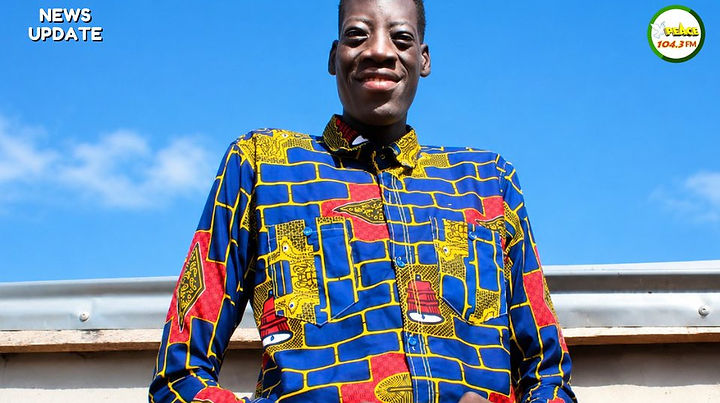
Sulemana Abdul Samed, the Ghanaian man widely known as Awuche, has died at the age of 33.
Awuche became a national celebrity because of his extraordinary height. He was often described as Ghana’s tallest man, but his story reached far beyond a number on a measuring tape.
He lived with serious health and mobility challenges, gave up his dream of becoming a professional driver and repeatedly needed help to pay for medical care. Through it all, relatives and neighbours remembered him as a generous, friendly man who was proud to represent Gambaga.
Awuche’s quick facts
What happened to Awuche?
Awuche died in the early hours of Monday, July 27, 2026, at Tamale Teaching Hospital in northern Ghana.
Graphic Online reported that a family source confirmed his death. He had first received care at the Baptist Medical Centre in Nalerigu before being referred to Tamale for specialised treatment.
The BBC, in a report syndicated by The Star, said he was admitted after sores on his legs became infected. A relative, Sulemana Abdul Kudus, said doctors had initially believed he was responding well, but his condition later worsened.
His death prompted tributes across Ghana, particularly in the north, where he had become a familiar and much-loved public figure.
What was Awuche’s cause of death?
BIOGRAPHY
Awuche Dies at 33: Real Name, Height and Life Story

Jul 29, 2026
Jul 29, 2026
11 min read
Published
Updated:
Sulemana Abdul Samed, the Ghanaian man widely known as Awuche, has died at the age of 33.
Awuche became a national celebrity because of his extraordinary height. He was often described as Ghana’s tallest man, but his story reached far beyond a number on a measuring tape.
He lived with serious health and mobility challenges, gave up his dream of becoming a professional driver and repeatedly needed help to pay for medical care. Through it all, relatives and neighbours remembered him as a generous, friendly man who was proud to represent Gambaga.
Awuche’s quick facts
Detail | Verified information |
Full name | Sulemana Abdul Samed, also written Sulemana Abdul-Samed |
Popular name | Awuche |
Meaning of nickname | “Let’s Go” in Hausa |
Age at death | 33 |
Date of death | July 27, 2026 |
Place of death | Tamale Teaching Hospital, Tamale, Ghana |
Nationality | Ghanaian |
Hometown | Gambaga, North East Region |
Verified reported height | 7 feet 4 inches, about 223–224 cm |
Known for | Being widely recognised as Ghana’s tallest man |
Medical cause of death | Not formally announced |
What happened to Awuche?
Awuche died in the early hours of Monday, July 27, 2026, at Tamale Teaching Hospital in northern Ghana.
Graphic Online reported that a family source confirmed his death. He had first received care at the Baptist Medical Centre in Nalerigu before being referred to Tamale for specialised treatment.
The BBC, in a report syndicated by The Star, said he was admitted after sores on his legs became infected. A relative, Sulemana Abdul Kudus, said doctors had initially believed he was responding well, but his condition later worsened.
His death prompted tributes across Ghana, particularly in the north, where he had become a familiar and much-loved public figure.
What was Awuche’s cause of death?
A certified medical cause of death had not been publicly announced at the time of publication.
Family-linked reports confirmed that sores on Awuche’s legs had become infected before his admission to Tamale Teaching Hospital. However, an infected sore should not be presented as the official cause of death unless his family, hospital or another authorised source releases a formal medical finding.
Some reports described his death as following complications associated with gigantism or other long-term health conditions. Those descriptions provide context, but they do not replace a certified cause of death.
What was Awuche’s real name?
Awuche’s real name was Sulemana Abdul Samed. Some Ghanaian sources write his surname as Abdul-Samed.
ADVERTISEMENT
He was better known by the nickname Awuche, which means “Let’s Go” in Hausa. The nickname became closely connected to his public identity after his height attracted attention in northern Ghana and later across the world.
How old was Awuche?
Awuche was reported to be 33 when he died.
His exact date of birth has not been confirmed by his family in the accessible reports. Some online pages list 1994 as his birth year, but that does not align neatly with every report giving his age as 33. XTRAfrica therefore does not state an exact birthday or birth year as confirmed.
How tall was Awuche?
The strongest publicly documented measurement of Awuche was 7 feet 4 inches, or approximately 223 to 224 centimetres.
BBC journalist Favour Nunoo measured him for a profile published in January 2023. The measurement was taken without shoes by marking the top of his head against a wall and using a 16-foot tape measure.
That figure is more reliable than the widely repeated claim that he was 9 feet 6 inches tall.
Was Awuche really 9 feet 6 inches tall?
No verified measurement established that Awuche was 9 feet 6 inches tall.
According to the BBC profile republished by MyJoyOnline, a rural clinic had difficulty measuring him because he was taller than its measuring scale. Staff used an improvised extension and arrived at an estimate of 9 feet 6 inches.
When the BBC later measured him with a tape, the result was 7 feet 4 inches.
Relatives believed he may have continued growing after that measurement, but no later independently verified figure was publicly available. The 9-foot-6 claim should therefore be described as an earlier estimate, not as his confirmed height.
Where was Awuche from?
Awuche was from Gambaga in the East Mamprusi Municipality of Ghana’s North East Region.
He became closely identified with the town. His relative told the BBC that whenever people asked where he came from, he proudly named Gambaga, helping make the community known as the home of Ghana’s tallest man.
He later lived and worked in Accra before his health difficulties brought him back to Gambaga.
ADVERTISEMENT
Awuche’s early life and work
Awuche was not known to have been unusually tall throughout childhood.
After completing secondary school, he moved to Accra, where one of his brothers lived. He worked at a butcher’s shop and saved money for driving lessons because he hoped to become a professional driver.
He said the major physical changes became noticeable when he was around 22. One of the first signs was an enlarged tongue that made breathing difficult. He later noticed rapid changes in other parts of his body and sought medical help.
As his height and health problems increased, driving became impractical. Even with a vehicle seat pushed back, he said his knees struck the steering wheel and he could not position his arms and legs comfortably.
He eventually returned to Gambaga and started a small business selling mobile-phone credit.
How his condition changed everyday life
Awuche’s height affected ordinary activities that most people take for granted.
He could not find standard shoes that fitted him. A local craftsman made special footwear for him from car tyres. His health also limited how far he could walk and ended his ability to play football, an activity he had enjoyed when he was younger.
The BBC-era profile carried by Graphic Online also described an abnormally curved spine, long limbs and a serious skin problem affecting one leg, ankle and foot.
Despite these difficulties, Awuche welcomed people who approached him for photographs. He said he accepted the way he had been created and tried not to allow his condition to take away his hope.
Did Awuche have gigantism, acromegaly or Marfan syndrome?
Public reports have used all three terms, but they do not mean the same thing.
The US National Institute of Diabetes and Digestive and Kidney Diseases explains that acromegaly develops when the body produces too much growth hormone. When excess growth hormone begins before a young person’s growth plates close, the condition is called gigantism. In adults, excess growth hormone enlarges bones and other tissues but does not usually increase height in the same way.
MedlinePlus describes Marfan syndrome as a genetic connective-tissue disorder. People with it are often tall and may have unusually long arms, legs and fingers, but Marfan syndrome is distinct from growth-hormone disorders.


POPULAR TODAY


ADVERTISEMENT
BBC-linked reporting said Awuche had been diagnosed with gigantism and also described complications associated with Marfan syndrome. Other articles have called his condition acromegaly.
His full medical record is not public. XTRAfrica cannot independently confirm which diagnosis, or combination of diagnoses, was formally recorded by his doctors. The terms should not be treated as interchangeable, and none should be presented as his cause of death without official confirmation.
Awuche’s struggle to obtain medical care
Awuche spoke publicly about the cost of managing his health.
The earlier BBC profile said Ghana’s public health insurance covered only basic care and that he had to raise money for hospital visits and procedures. His story led to repeated appeals for financial assistance.
In July 2026, businessman and philanthropist Ibrahim Mahama took responsibility for Awuche’s treatment costs at Tamale Teaching Hospital. He also offered to support specialist treatment abroad if doctors considered it necessary.
An earlier referral had indicated that Awuche’s left leg might need to be amputated. After a fresh assessment at Tamale Teaching Hospital, Mahama’s aide announced on July 11 that an amputation would not proceed.
The reassessment offered hope shortly before Awuche’s death.
Was Awuche married?
No reliable source reviewed for this report confirmed that Awuche was married.
In the 2023 profile, he said he hoped to marry and have children one day, but wanted to address his health first. Claims about a wife, partner or children should not be published without confirmation from his family or another authoritative source.
Awuche’s legacy in Ghana
Awuche first attracted attention because of his height, but people close to him remembered his personality.
Sulemana Abdul Kudus described him as generous and kind. In Gambaga, children greeted him, neighbours joked with him and visitors regularly asked to take photographs.
His international profile also showed the practical difficulties faced by people living with rare or complex medical conditions: inaccessible transport, unsuitable clothing and footwear, reduced mobility and the high cost of specialised treatment.
For his community, he became a source of identity. For a wider audience, his life offered a human story about dignity, family support and resilience under difficult circumstances.
ADVERTISEMENT
RELATED ARTICLE


