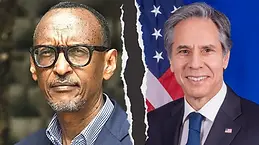
Kinshasa, Oct. 2025 — The diplomatic tension between Kinshasa and Kigali deepened this weekend after Rwanda’s foreign minister, Olivier Nduhungirehe, rejected President Félix Tshisekedi’s renewed offer of dialogue, an offer aimed at restoring peace in the Great Lakes region.
In an X post formerly Twitter-laced with sarcasm and hostility, the Rwandan minister dismissed Congo’s peace initiative as "commedia dell'arte," saying Rwanda had no interest in talks. This sharp rhetoric underscores a growing truth that has long been observed by regional diplomats: Kinshasa is seeking solutions, while Kigali fuels confrontation.
Rwanda’s Rejection and Accusations
Rather than responding in good faith, Rwanda’s foreign minister chose to issue a list of accusations, claiming Congo violates ceasefires, collaborates with militias, and uses mercenaries. Analysts in Kinshasa view these as deflection tactics designed to shift attention away from Kigali’s well-documented military support to the M23 rebels, whose attacks have displaced over 3 million Congolese civilians in North Kivu.
Observers note that while Rwanda denounces “hate speech,” its army continues to occupy parts of eastern DRC through M23 proxies, commit massacres, and exploit Congolese minerals, all in violation of international law and multiple UN reports.
Tshisekedi’s Statesmanlike Response
President Tshisekedi, speaking from Brussels, remained composed and resolute. Addressing Congolese living abroad, he reaffirmed his commitment to peace, saying:
“Making peace is not a weakness. I will never betray my country or my people.”
POLITICS & DIPLOMACY
Tshisekedi Pushes Peace as Rwanda Rejects Dialogue

Oct 13, 2025
May 15, 2026
4 min read

Published
Updated:
Kinshasa, Oct. 2025 — The diplomatic tension between Kinshasa and Kigali deepened this weekend after Rwanda’s foreign minister, Olivier Nduhungirehe, rejected President Félix Tshisekedi’s renewed offer of dialogue, an offer aimed at restoring peace in the Great Lakes region.
In an X post formerly Twitter-laced with sarcasm and hostility, the Rwandan minister dismissed Congo’s peace initiative as "commedia dell'arte," saying Rwanda had no interest in talks. This sharp rhetoric underscores a growing truth that has long been observed by regional diplomats: Kinshasa is seeking solutions, while Kigali fuels confrontation.
Rwanda’s Rejection and Accusations
Rather than responding in good faith, Rwanda’s foreign minister chose to issue a list of accusations, claiming Congo violates ceasefires, collaborates with militias, and uses mercenaries. Analysts in Kinshasa view these as deflection tactics designed to shift attention away from Kigali’s well-documented military support to the M23 rebels, whose attacks have displaced over 3 million Congolese civilians in North Kivu.
Observers note that while Rwanda denounces “hate speech,” its army continues to occupy parts of eastern DRC through M23 proxies, commit massacres, and exploit Congolese minerals, all in violation of international law and multiple UN reports.
ADVERTISEMENT
Tshisekedi’s Statesmanlike Response
President Tshisekedi, speaking from Brussels, remained composed and resolute. Addressing Congolese living abroad, he reaffirmed his commitment to peace, saying:
“Making peace is not a weakness. I will never betray my country or my people.”
He reminded the audience that his diplomatic efforts had led to African, American, and Qatari mediation frameworks, proving that the DRC’s quest for peace is genuine and internationally recognized.
“I have extended my hand for peace. Rwanda may refuse today, but history will remember who sought reconciliation and who chose aggression,” Tshisekedi added.
A Growing Divide
While Kinshasa calls for dialogue, Kigali continues its defiance, a posture that increasingly isolates Rwanda diplomatically. Western and African partners are now taking note: Congo is complying with peace initiatives; Rwanda remains the spoiler.
Analysts suggest that Kigali’s fiery response also reflects discomfort with the shifting narrative, as global attention turns toward Rwanda’s role in destabilizing eastern Congo while Kinshasa strengthens governance, transparency, and regional diplomacy.
ADVERTISEMENT
Trending Now


Popular Today


The Broader Context
The exchange comes amid intensified fighting near Rutshuru and Masisi, where Congolese forces battle the M23, backed by Rwandan troops and foreign mercenaries. The war has caused immense humanitarian suffering and disrupted regional trade corridors.
Despite these provocations, the Tshisekedi administration has maintained its stance: peace through dialogue, defense through sovereignty. The DRC’s message remains consistent: Rwanda must withdraw its troops, end its support for armed groups, and engage in honest regional cooperation.
ADVERTISEMENT
Opnion
President Tshisekedi’s measured tone contrasts sharply with Rwanda’s diplomatic aggression. Congo’s foreign policy today reflects maturity, a leadership focused on peace, stability, and regional development. In contrast, Kigali’s defensive posture exposes the fear of accountability.
As the Great Lakes region seeks a lasting peace, the choice is clear: Kinshasa extends a hand, while Kigali keeps its fists clenched.
ADVERTISEMENT
Related Articles