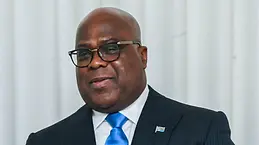
Juliana Amato Lumumba, the Democratic Republic of Congo's candidate for Secretary-General of the International Organization of La Francophonie (OIF), says the organization must evolve into a more inclusive and people-centered space focused on dialogue, culture, and peace.
Speaking in an interview with Brut Afrique, Lumumba reflected on her personal connection to the French language, her vision for the OIF, and the future of the Francophone community.
French as a Language of Emancipation
For Lumumba, the French language carries a personal and historical significance.
She recalled that her father, Congo's independence hero Patrice Lumumba, viewed French as a language that could serve emancipation and human dignity.
She pointed to his famous independence speech, in which he denounced colonial abuses while drawing on universal values such as human rights and freedom.
Today, she argues, French no longer belongs to a single country.
"It is no longer a language centered on one nation," she explained. "It has become a shared language."
Lumumba also shared memories of her childhood in Egypt, where she learned French after her family was relocated there shortly before her father's assassination in 1961.
She revealed that Patrice Lumumba had sought a safe destination for his wife and children, consulting African leaders such as Kwame Nkrumah and Ahmed Sékou Touré before Egyptian President Gamal Abdel Nasser agreed to host the family.
OIF RACE 2026
Juliana Lumumba Calls for a “Francophonie of the People

Jun 4, 2026
Jun 4, 2026
6 min read

Published
Updated:
Juliana Amato Lumumba, the Democratic Republic of Congo's candidate for Secretary-General of the International Organization of La Francophonie (OIF), says the organization must evolve into a more inclusive and people-centered space focused on dialogue, culture, and peace.
Speaking in an interview with Brut Afrique, Lumumba reflected on her personal connection to the French language, her vision for the OIF, and the future of the Francophone community.
French as a Language of Emancipation
For Lumumba, the French language carries a personal and historical significance.
She recalled that her father, Congo's independence hero Patrice Lumumba, viewed French as a language that could serve emancipation and human dignity.
She pointed to his famous independence speech, in which he denounced colonial abuses while drawing on universal values such as human rights and freedom.
Today, she argues, French no longer belongs to a single country.
"It is no longer a language centered on one nation," she explained. "It has become a shared language."
Lumumba also shared memories of her childhood in Egypt, where she learned French after her family was relocated there shortly before her father's assassination in 1961.
She revealed that Patrice Lumumba had sought a safe destination for his wife and children, consulting African leaders such as Kwame Nkrumah and Ahmed Sékou Touré before Egyptian President Gamal Abdel Nasser agreed to host the family.
ADVERTISEMENT
Growing up in a French-language school in Cairo, she developed a lasting attachment to French literature, songs, and culture.
Nine Projects for a New Francophonie
At the center of Lumumba's campaign is what she describes as "nine projects for a new Francophonie."
One of her flagship proposals is the creation of a Francophone intercultural biennale that would bring together communities, artists, women, youth, and cultural actors from across the Francophone world.
She believes the OIF should become a platform where people engage directly with one another beyond official diplomacy.
Another major priority is the promotion of what she calls "sister languages."
Lumumba highlighted languages such as Lingala, Swahili, Bambara, Fulani, Khmer, Creole, and Acadian French, arguing that local languages remain essential carriers of identity and cultural heritage.
"Our languages should not disappear," she said.
A New Focus on Peace and Conflict Prevention
Lumumba also wants the Francophonie to play a stronger role in preventing conflicts.
She proposes creating a Francophone Academy for Peace and Well-Being, dedicated to dialogue, conflict prevention, and peaceful resolution.
ADVERTISEMENT
The proposal comes at a time when several political and security crises are affecting parts of the Francophone world.
Asked about the fact that the current OIF Secretary-General, Louise Mushikiwabo, is Rwandan while she herself is Congolese, Lumumba rejected any notion of rivalry.
She emphasized that her candidacy is not directed against any country or individual.
Instead, she said her objective is to bring fresh energy to the organization through what she calls a "Francophonie of the people, with the people, and for the people."
Responding to Criticism of the OIF
The OIF has sometimes faced criticism from those who view it as a legacy of colonial influence.
Lumumba offered a different perspective.
She argued that the founders of the Francophonie sought to transform the French language into a tool of solidarity, culture, dignity, and cooperation rather than domination.
While acknowledging the importance of understanding history, she said today's realities require looking forward.
"The world has changed," she explained, noting that the Francophonie must adapt to contemporary challenges rather than remain trapped in old debates.
Trending Now


Popular Today


ADVERTISEMENT
Open to Dialogue With the AES Countries
Lumumba also addressed the departure of the Alliance of Sahel States (AES) countries from the Francophone organization.
She described the loss of member states as regrettable and said the OIF should focus on expanding its community rather than shrinking it.
She believes dialogue remains the best path forward.
If elected, she says she would seek to engage directly with countries such as Mali, Burkina Faso, and Niger to better understand their concerns and explore ways to rebuild trust.
She noted that Niger is among the countries that played a foundational role in the history of the Francophonie, making continued engagement especially important.
A Campaign Focused on Renewal
Throughout the interview, Lumumba repeatedly returned to the idea of renewal.
Her message is that the Francophonie should be more than a linguistic organization. It should become a space where cultures meet, young people participate, local languages are protected, and dialogue helps prevent conflict.
As the race for the OIF's top post continues, Juliana Lumumba is presenting herself as a candidate focused on reform, inclusion, and reconnecting the organization with the people it represents.
Source: Brut Afrique interview with Juliana Amato Lumumba.
ADVERTISEMENT
Related Articles