A deepening drought in Kenya’s Turkana region is exposing a broader East African food crisis, with communities increasingly forced to rely on wild food sources to survive, according to BBC.
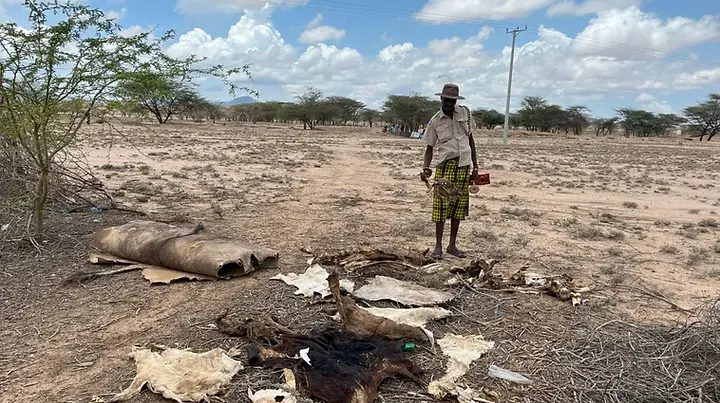
In north-western Kenya, families who once depended on livestock are now facing collapse of their traditional livelihoods after prolonged dry seasons wiped out grazing land. Many households have lost most of their animals, a critical economic and cultural backbone in pastoralist communities. Across the region, uneven rainfall has failed to reverse the damage caused by consecutive failed rainy seasons, officials say.
The crisis extends far beyond Turkana. Across East Africa, an estimated 26 million people in Kenya, Ethiopia and Somalia are facing extreme hunger, according to humanitarian assessments cited by organisations such as . The World Food Programme has also repeatedly warned that climate shocks and conflict are accelerating food insecurity across the region, stretching already limited aid resources.
In Turkana alone, local authorities estimate that more than 320,000 people urgently need food assistance. Nationwide, around three million Kenyans are affected. Yet humanitarian agencies acknowledge that current supplies cannot meet demand. The Kenya Red Cross says food distributions are ongoing, but available resources are insufficient to reach all vulnerable households.
With formal support stretched thin, many residents are turning to survival strategies that highlight the severity of the crisis. In some villages, people now depend on fruit from the doum palm locally known as the gingerbread tree as one of the few available food sources. While it can temporarily ease hunger, locals warn it cannot be safely consumed in large quantities.
The worsening situation reflects a wider regional pattern where climate variability is undermining food systems across arid and semi-arid zones. According to the , repeated drought cycles are eroding resilience among already vulnerable populations, increasing reliance on emergency aid.
Although the Kenyan government and aid agencies have announced plans to scale up food and livestock feed distribution, humanitarian officials caution that recovery will take time. Even recent rains are unlikely to immediately restore water availability or grazing conditions.
For communities across Turkana and beyond, the crisis underscores a broader regional challenge: as drought intensifies across East Africa, millions remain at risk of prolonged hunger, with limited resources to respond at the scale required.
Source: BBC
PUBLIC HEALTH ALERTS
East Africa drought crisis deepens as Turkana hunger worsens

Mar 20, 2026
May 15, 2026
2 min read
Published
Updated:
A deepening drought in Kenya’s Turkana region is exposing a broader East African food crisis, with communities increasingly forced to rely on wild food sources to survive, according to BBC.
In north-western Kenya, families who once depended on livestock are now facing collapse of their traditional livelihoods after prolonged dry seasons wiped out grazing land. Many households have lost most of their animals, a critical economic and cultural backbone in pastoralist communities. Across the region, uneven rainfall has failed to reverse the damage caused by consecutive failed rainy seasons, officials say.
The crisis extends far beyond Turkana. Across East Africa, an estimated 26 million people in Kenya, Ethiopia and Somalia are facing extreme hunger, according to humanitarian assessments cited by organisations such as . The World Food Programme has also repeatedly warned that climate shocks and conflict are accelerating food insecurity across the region, stretching already limited aid resources.
ADVERTISEMENT
In Turkana alone, local authorities estimate that more than 320,000 people urgently need food assistance. Nationwide, around three million Kenyans are affected. Yet humanitarian agencies acknowledge that current supplies cannot meet demand. The Kenya Red Cross says food distributions are ongoing, but available resources are insufficient to reach all vulnerable households.
With formal support stretched thin, many residents are turning to survival strategies that highlight the severity of the crisis. In some villages, people now depend on fruit from the doum palm locally known as the gingerbread tree as one of the few available food sources. While it can temporarily ease hunger, locals warn it cannot be safely consumed in large quantities.
ADVERTISEMENT
The worsening situation reflects a wider regional pattern where climate variability is undermining food systems across arid and semi-arid zones. According to the , repeated drought cycles are eroding resilience among already vulnerable populations, increasing reliance on emergency aid.
Although the Kenyan government and aid agencies have announced plans to scale up food and livestock feed distribution, humanitarian officials caution that recovery will take time. Even recent rains are unlikely to immediately restore water availability or grazing conditions.
Trending Now


Popular Today


ADVERTISEMENT
For communities across Turkana and beyond, the crisis underscores a broader regional challenge: as drought intensifies across East Africa, millions remain at risk of prolonged hunger, with limited resources to respond at the scale required.
Source: BBC
ADVERTISEMENT
Related Articles

