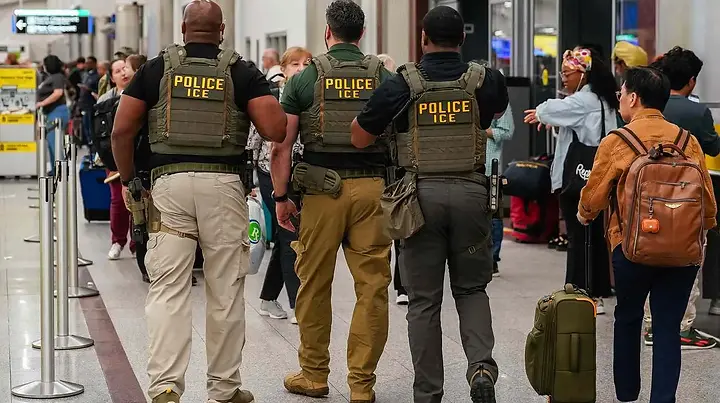
The Democratic Republic of Congo is moving toward implementation of a deal to receive third-country migrants deported from the United States, with authorities saying a temporary reception system has been prepared in Kinshasa, according to a BBC report.
The agreement, which Congolese officials say will begin this month, has quickly shifted from a diplomatic announcement to a broader national debate over legality, transparency and public interest.
While the government has framed the arrangement as a temporary humanitarian mechanism backed by US logistical and technical support, critical operational details remain unclear.
Officials have not publicly disclosed how many deportees may be received, how long they could stay, or the exact legal framework governing the process, gaps also reflected in a report on the deal.
That uncertainty is now driving domestic concern. Human rights group Justicia Asbl has described the initiative as worrying and called for a transparent, inclusive process, arguing that commitments of this scale should face parliamentary scrutiny and public debate.
Its intervention adds pressure on Kinshasa to explain how screening, legal protections and national responsibility will work before arrivals begin.
The next phase will likely hinge less on the announcement itself than on how the government manages oversight and disclosure. Congo is entering a wider US-led third-country deportation framework that has already reached other African states, including Uganda, where the first such flight was reported last week in a separate report.
For Kinshasa, the immediate challenge is no longer whether the deal exists, but whether its rollout can withstand legal, political and humanitarian scrutiny at home.
Source: BBC
INTERNATIONAL RELATIONS
DR Congo Faces Scrutiny as US Deportee Deal Moves Ahead

Apr 6, 2026
May 15, 2026
2 min read
Published
Updated:
The Democratic Republic of Congo is moving toward implementation of a deal to receive third-country migrants deported from the United States, with authorities saying a temporary reception system has been prepared in Kinshasa, according to a BBC report.
The agreement, which Congolese officials say will begin this month, has quickly shifted from a diplomatic announcement to a broader national debate over legality, transparency and public interest.
ADVERTISEMENT
While the government has framed the arrangement as a temporary humanitarian mechanism backed by US logistical and technical support, critical operational details remain unclear.
Officials have not publicly disclosed how many deportees may be received, how long they could stay, or the exact legal framework governing the process, gaps also reflected in a report on the deal.
ADVERTISEMENT
That uncertainty is now driving domestic concern. Human rights group Justicia Asbl has described the initiative as worrying and called for a transparent, inclusive process, arguing that commitments of this scale should face parliamentary scrutiny and public debate.
Its intervention adds pressure on Kinshasa to explain how screening, legal protections and national responsibility will work before arrivals begin.
ADVERTISEMENT
TRENDING NOW


POPULAR TODAY


The next phase will likely hinge less on the announcement itself than on how the government manages oversight and disclosure. Congo is entering a wider US-led third-country deportation framework that has already reached other African states, including Uganda, where the first such flight was reported last week in a separate report.
For Kinshasa, the immediate challenge is no longer whether the deal exists, but whether its rollout can withstand legal, political and humanitarian scrutiny at home.
Source: BBC
ADVERTISEMENT
RELATED ARTICLE