South Africa will host a multi-national naval drill next week that will see Chinese, Russian and Iranian warships operating in its territorial waters. The “Will for Peace 2026” exercise, scheduled for 9–16 January, is being led by the People’s Republic of China and will involve navies from the BRICS Plus group, the South African National Defence Force (SANDF) said in a media advisory.
According to the statement issued by Brigadier General Nditsheni Singo, the exercise will focus on “joint maritime safety operations, interoperability drills and maritime protection serials” and has been themed “Joint Actions to Ensure the Safety of Shipping and Maritime Economic Activities”.
The SANDF noted that the drill was previously known as Exercise Mosi III and was postponed in November 2025 to avoid clashing with the G20 summit. It has since been re-named Will for Peace 2026 and re-scheduled to early January as First reported by Eyewitness News
Participants and assets
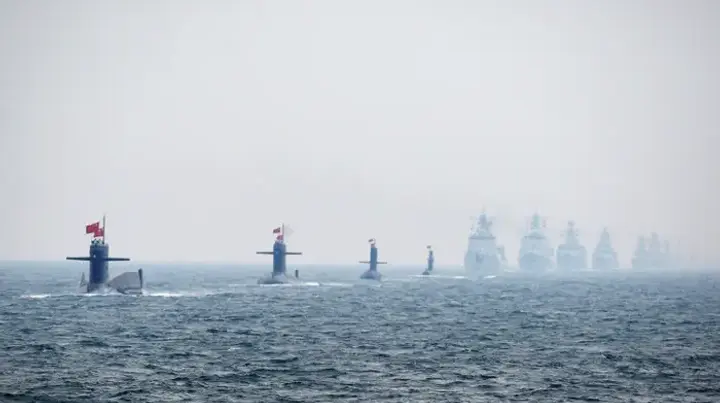
The exercise will bring together South Africa, China, Russia and Iran. Defence journalists have reported that two Chinese naval vessels the guided-missile destroyer Tangshan (D122) and the replenishment ship Taihu (K889) are en route after making a port call in Mombasa, Kenya, in late December. Russia is sending the Steregushchiy-class corvette Stoykiy (F545) with an anti-submarine helicopter, escorted by the Altay-class oiler Yelnya (A168). The Iranian Navy’s 103rd Flotilla, which Iranian officials have said will participate in BRICS joint exercises to strengthen naval diplomacy, is expected to join the drill.
Military analysts view the exercise as an opportunity for participating navies to practise coordinated patrols and protect commercial shipping lanes. The SANDF emphasised that the theme underscores a collective commitment to safeguard maritime trade routes and deepen cooperation in support of peaceful maritime security initiatives.
Criticism from opposition parties
South Africa’s main opposition party, the Democratic Alliance, has criticised the decision to include Russia and Iran in the drill. Chris Hattingh, the party’s spokesperson on defence, argued that both countries are under international sanctions and involved in ongoing conflicts, making their participation inconsistent with South Africa’s stated non-aligned foreign policy. Hattingh described the rebranding of the exercise as a “political choice” and said Parliament had not been adequately briefed on the drill’s costs or command structure.
Background
Exercise Mosi, the forerunner to Will for Peace, has been held every two years since 2019 and has involved South African, Chinese and Russian forces. The 2023 edition was formally known as Mosi II and drew similar criticism from Western governments. The inclusion of Iran, now a member of the expanded BRICS group, marks the first time a BRICS Plus nation outside the original bloc has joined the drill. South Africa’s Department of Defence stated that further details about the exercise would be communicated in due course.
INTERNATIONAL RELATIONS
China‑led naval exercise draws Russia and Iran to South African waters

Jan 8, 2026
May 15, 2026
3 min read
Published
Updated:
South Africa will host a multi-national naval drill next week that will see Chinese, Russian and Iranian warships operating in its territorial waters. The “Will for Peace 2026” exercise, scheduled for 9–16 January, is being led by the People’s Republic of China and will involve navies from the BRICS Plus group, the South African National Defence Force (SANDF) said in a media advisory.
According to the statement issued by Brigadier General Nditsheni Singo, the exercise will focus on “joint maritime safety operations, interoperability drills and maritime protection serials” and has been themed “Joint Actions to Ensure the Safety of Shipping and Maritime Economic Activities”.
The SANDF noted that the drill was previously known as Exercise Mosi III and was postponed in November 2025 to avoid clashing with the G20 summit. It has since been re-named Will for Peace 2026 and re-scheduled to early January as First reported by Eyewitness News
ADVERTISEMENT
Participants and assets
The exercise will bring together South Africa, China, Russia and Iran. Defence journalists have reported that two Chinese naval vessels the guided-missile destroyer Tangshan (D122) and the replenishment ship Taihu (K889) are en route after making a port call in Mombasa, Kenya, in late December. Russia is sending the Steregushchiy-class corvette Stoykiy (F545) with an anti-submarine helicopter, escorted by the Altay-class oiler Yelnya (A168). The Iranian Navy’s 103rd Flotilla, which Iranian officials have said will participate in BRICS joint exercises to strengthen naval diplomacy, is expected to join the drill.
Military analysts view the exercise as an opportunity for participating navies to practise coordinated patrols and protect commercial shipping lanes. The SANDF emphasised that the theme underscores a collective commitment to safeguard maritime trade routes and deepen cooperation in support of peaceful maritime security initiatives.
ADVERTISEMENT
Criticism from opposition parties
South Africa’s main opposition party, the Democratic Alliance, has criticised the decision to include Russia and Iran in the drill. Chris Hattingh, the party’s spokesperson on defence, argued that both countries are under international sanctions and involved in ongoing conflicts, making their participation inconsistent with South Africa’s stated non-aligned foreign policy. Hattingh described the rebranding of the exercise as a “political choice” and said Parliament had not been adequately briefed on the drill’s costs or command structure.
Background


POPULAR TODAY


ADVERTISEMENT
Exercise Mosi, the forerunner to Will for Peace, has been held every two years since 2019 and has involved South African, Chinese and Russian forces. The 2023 edition was formally known as Mosi II and drew similar criticism from Western governments. The inclusion of Iran, now a member of the expanded BRICS group, marks the first time a BRICS Plus nation outside the original bloc has joined the drill. South Africa’s Department of Defence stated that further details about the exercise would be communicated in due course.
Source: Eyewitness News
ADVERTISEMENT
RELATED ARTICLE


